Book Reviews
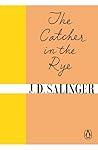 The Catcher in the Rye by J.D. Salinger
My rating: 4 of 5 stars
WARNING: MILD SPOILERS
'I can’t explain what I mean. And even if I could, I’m not sure I’d feel like it.'
So I finally read a book my mum had been telling me about for years and, unlike her previous recommendation of 'The Lord of the Flies', I was impressed. However, I'm not sure if she recalls it as accurately as she assumed - with her major line being 'it's about a boy that goes crazy'. I would say that doesn't quite suffice as a synopsis when Holden's 'craziness' can be debated.
First you would need to find the definition of 'crazy' - a failure to function? A tendency to harm others? For the former, I think it could be heavily argued that Holden fits the bill with his inability to budget and handle money, to stay in and graduate from school, ect.. However, a failure to function is pretty prevalent in other disorders, such as his apparent depression, so it doesn't quite encompass what would garner the label as 'crazy'.
The latter somewhat suits it better. Someone who's crazy is often associated with being dangerous, but surprisingly, despite the misleading tone of the book, Holden does near to no harm to others other than a brief boyish fist fight. His continuous, almost stream-of-conscious monologue creates tension throughout the novel, as if to build up to a violent expression of his angst and frustration at the superficial adult world, but it never comes. In fact, violence of that calibre would seem quite out of Holden's character - he values the innocence and purity in the world and the innocence and purity within himself, which sex or violence or any other 'phony' performative action would taint.
In fact, I'd say the overused, popular definition of craziness would somewhat work best, 'insanity is doing the same thing over and over and expecting different results'. My evidence for this is quite abstract in nature. You could say, Holden seems somewhat in a time loop - unable to move on into his adult life, into the future, past the tragedy in his past. He goes to different schools, flunking years over and over, however, in Holden's case, it seems as if he expects no results at all. And that, in its way, is what makes his madness seem so difficult to pin down and yet very certainly madness. There's rarely intention in his actions, only feelings, and these feelings guide him in circles with no results - no light at the end of the tunnel because he hasn't learnt to start digging. As his teacher tells him, 'educated and scholarly men, if they’re brilliant and creative to begin with...tend to leave infinitely more valuable records behind them than men do who are merely brilliant and creative.'
Therefore, I feel what my mum sensed when reading this book, this intuitive feeling she had on Holden's character which has stuck steadfast against the gradual erosion of all her memory of the book, can be reasonably argued. However, I wouldn't say 'crazy' is the best word - it almost implies a hopeless case, when Holden could well be a character of much intellectual potential if he only cultivated the skill of living life and functioning with the griefs that come with it.
When I started reading this book, Holden did not come of much as a 'crazy' character to me, a deep part of me related to his observations - but the difference between me and Holden is that (I suspect) I have cultivated the skill to discard my 'feelings', my intuitive observations of a situation, in exchange for pragmatic ease, as I suspect many people do. The popularity of this book is no doubt down to this deep-rooted relatability to Holden's character - and nicely highlights how adult life requires ignorance. It requires an ability to passively accept the conventions of society - and whether this is a good thing or not, I don't feel qualified to judge.
 The Cat and The City by Nick Bradley
My rating: 5 of 5 stars
'I am at war - at war with the ants'
The Cat and the City, with its bright, stylistic cover, immediately grasped my attention in the bookshop, and then I was further taken in by the emblematic cat and emphasis on Japanese culture. I have taken consistent interest in the stark differences between Western and Eastern culture and this book did not disappoint me in its exploration of it.
Many of the stories are left on cliff-hangers, but the conclusions are then alluded to in passing in following stories, cleverly interweaving the lives of the characters and preventing the reader emphasising any particular character as the 'main' one. A main character would, in fact, ruin the effect of the book which is creating the image of an expansive landscape where people are of little significance, thus their stories are never told from beginning to end as the cat loses interest as fast as it gains it. Some of the links between the stories could feel rather forced as, from living in a city myself and a much smaller city at that, I know that I would rarely expect to recognise strangers or for people I know to know the same people as me - it could often feel too tightly interwoven, especially for the mega-metropolis Bradley is trying to portray.
The tonality oscillates from heartwarming to downright degeneracy, with some chapters going into explicit detail on human experience, sexual and emotional. However, for the intention of this novel, this contrast is more than necessary - highlighting the superficial repression, and subsequent over-expression, of what Japanese society classes as depraved. I cannot omit that I did find some sections difficult to read and sometimes I was taken aback to the point of considering whether this content was for effect or for the author's own pleasure. I concluded that this is rather irrelevant, since the intention is somewhat meaningless as long as it creates the desired effect, and it is a lie to believe that a book recounting human experiences would not be filled with disturbing extracts - rather that would be an overly optimistic perspective on human society.
Bradley often narrows down cultural differences to language, which, as someone plagued with the very British inability to learn any languages aside from English, I find very interesting. He goes through several narrators, most Japanese but some foreign, and a perfect contrast in the experience of the Japanese language can be found in chapters 'Autumn Leaves' and 'Opening Ceremony':
'he never felt that way about Japanese - even though he didn’t understand it. The fluid monotonic sound of it alone made it a far more beautiful and spiritual language. English, with its heavy stresses and wobbly intonation, was dirty and repugnant to his ears'
~ George
'felt like Japanese had always stifled her true feelings'
~ Ryoko
George, a British man who has little understanding or ability to speak Japanese, sees it as superior to English, a beautiful language that is absent of the disgusting nature prevalent in his mother tongue. He blames his sexually latent thoughts and behaviour on the language he has learnt to speak, somewhat distancing himself from responsibility. In contrast, Ryoko, a Japanese woman who is fluent in the language and hesitant to speak it, sees Japanese as restrictive and is far more comfortable speaking in English despite it not being her mother tongue. This contrast may be a result of their varying levels of understanding, with Ryoko being fluent in both languages, therefore personally experiencing the difficulties that come with expression in Japanese, whereas George loves the sound of Japanese, the conceptual idea of having his Japanese girlfriend, Mari, despite their relationship difficulties - a man entranced by the aesthetic of Japanese culture. He somewhat acts as the token foreigner that Japan and its law tend to reject.
At the end of this messy first review, I shall attempt to quickly summarise. This review certainly does not cover all my thoughts on this book so it is instead a ramble on a couple points that most entranced me. Despite some feelings of forcefulness, such as the cat sometimes feeling jammed into stories and characters appearing to other characters despite the millions of other people within the city, it generally creates a great overall effect, a pathway to empathise with many different characters with different life expeirences. The contrast between Western and Eastern culture is well-done, even if incomplete, but how can anyone be expected to perfectly compare all the similarities and differences between two cultures when they were only brought up in one. I am a personal lover of dark, depraved tones and the exploration of disturbing themes, so this appealed to me on an aesthetic level, but the way these themes contrast with very warm uplifting sections further accentuates the beauty that can be found in life within the complex streets of the metropolis.
 Babel by R.F. Kuang
My rating: 3 of 5 stars
** DISCLAIMER: This review doesn't have any explicit spoilers but it does allude to things which may be considered mild spoilers **
Babel (a.k.a The Necessity of Violence) felt like a lot saying not very much. My biggest problem with this book was how words/time in the book was distributed and the subsequent power, or lack there of, which events had on the reader and the message. However, although I have problems with the way this book was written, I did generally enjoy it in a 'popcorn' sort of way - consumable - hence why I had to give it a medium rating. However, I was constantly aware that this was not the intention of the author, despite her use of the beloved dark academia setting.
The narrative was peppered with explicit statements on the issues she was addressing and the agenda she was pushing - I often didn't feel like I had the space to interpret the message of things myself. Since this was written from Robin's perspective, I think it somewhat took away from the sense of realism of his character - like it was cutting from Robin to the author's voice over and over, explaining to us what she was alluding to in the fear we might misconstrue things.
In general, the characters were a major weak point of the book - in particular, the believability of the characters and the relationships between them. A central element of the book, pushing the plot along in the way it played out, was the friendship between the main characters. However, the author didn't spend much time actually building up these relationships and instead just told us of their apparent closeness in exposition. I feel like this really set the characters up to feel like afterthoughts and tools for the author's message rather than fleshed out people whose actions were driven by their own emotions and thoughts processes. As a result of this, I didn't really care about the fates of any of the characters or the friendship group because I simply couldn't detach them from the plot and sociopolitical commentary. In particular, the inclusion of Letty within the friendship group confused me because the author rarely showed any scenes that really supported the idea that she was close friends with anyone in the group. Most of the scenes and events with Letty just involved her being annoyed at someone, creating drama, and misunderstanding her 'friends' entirely. As her involvement in the group and the trust they had in her was essential for the ending of the book, it seems like Letty was a plot device in a not so well constructed disguise.
I feel like the author could have easily solved the problem of this rushed friendship by giving us more scenes early on in the book of the four main characters spending time together and growing closer organically through conversation and shared activities. These scenes also could've been utilised to introduce the backstory of the main characters rather than via singular chapters from their own perspective shoe-horned in at awkward moments in the story. A lot of pages were also used up on events displaying the racial discrimination in 19th century Oxford. Although I do think it was important to show how racism affects the everyday lives of people of colour, there were entire scenes throughout the story that purely served to show how 'other' the Babel students were. It felt like the author was just pushing a point that the reader understood a long time ago rather than building on the important elements of the story.
This links to another criticism I had about the book, which was that it was far too long for the story it was telling. I feel like the same themes could have been explored well enough in a 300-word book rather than the (approx.) 550 words Babel takes up. There were sections where the author talked about topics that really didn't seem to be serving much purpose, such as describing the everyday life in the tower at a climactic point in the book, or talking about topics which served a purpose initially but were then stretched on for far too long, such as the section talking about the headlines from various different newspapers. There were parts of the book where I just wasn't looking forward to picking it up again because everything was too drawn out.
The message also fell flat due to the poor believability of the characters. The 'villain' characters lacked a fair bit of depth, with one of the main antagonists, Professor Lovell, seeming rather one-dimensional. Even Letty, the character who was supposed to act as a bridge between the two sides and thus be more sympathetic, was not particularly likeable. It felt like the author had too much against the privileged individuals in society to present them as balanced characters, so the conflict felt somewhat cartoonish and therefore the impact of the story didn't feel like it met its full potential.
These problems I had with the writing were unfortunate because I did really enjoy the premise. I liked how silver was used as a concrete way to show how world powers exploit the cultures they colonise. I also enjoyed the exploration of what it means to translate language and how we cannot translate everything into one language without lost information. The tunnel vision of the academics, thinking that they can translate everything into English and largely ignoring the wider implications of this academic commitment, feels very relevant even in this modern day. World powers are parasitic on the curiosity of academia, and often academics lack control of what their research contributes to and the harm that it does. These are interesting topics that were explored in this book and were part of why I still enjoyed the read. However, they also suffered from the straightforward explanations of the allegories which would take me out of the story completely.
Overall, Babel was an entertaining read and it was the first book in a while that I managed to read somewhat consistently. However, it was clear that the author was trying to get across messages that were meaningful to them and I felt like this was done in a somewhat clumsy way which disrupted the reader's immersion in the story. The characters were the primary fault for me, as I had no attachment to them at all and their development through the story felt quite unnatural. However, I also think the deeper messages got somewhat diluted in the sheer amount of words that were devoted to areas of the story that didn't have much impact. The concept of the story was good and I thought the themes it attempted to explore were interesting, but the writing fell below my expectation.
View all my reviews
Izara’s quotes
"Whatever evolution this or that popular character has gone through between the book covers, his fate is fixed in our minds, and, similarly, we expect our friends to follow this or that logical and conventional pattern we have fixed for them"— Vladimir Nabokov